


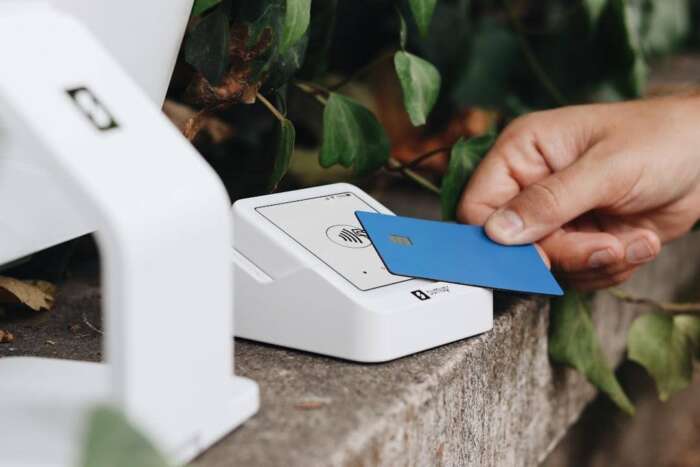
Mobile card readers have become the default payment acceptance tool for a huge range of small and mobile businesses, from farmers market vendors to service providers making house calls, offering a low-barrier way to accept card payments without the investment required for a full countertop terminal.
The mobile card reader market includes options ranging from genuinely free basic readers to more sophisticated devices costing well over a hundred dollars, and the processing rates attached to these devices vary just as widely, which means the true cost comparison requires looking well beyond the sticker price of the reader itself.
Understanding how reader cost, processing rate, and feature set interact helps a business choose the option that actually minimizes total cost for its specific transaction volume and business type, rather than simply choosing whichever reader appears cheapest or most heavily marketed at first glance.
The Relationship Between Reader Cost and Processing Rate
Mobile card reader providers frequently subsidize the reader’s upfront cost through a slightly higher processing rate, similar to the free equipment dynamic seen with traditional terminals, which means the genuinely free or very cheap reader options often carry a rate premium worth factoring into a total cost comparison.
- Free or heavily discounted readers often pair with a modestly higher percentage processing rate
- Readers requiring upfront purchase sometimes unlock a lower ongoing processing rate in exchange
- The breakeven point between these two paths depends on a business’s expected transaction volume
- Low-volume businesses often come out ahead with the free reader despite the higher rate
A business processing a high volume of transactions monthly may find that purchasing a reader outright, in exchange for a lower ongoing rate, pays for itself relatively quickly, while a lower-volume business may never reach that breakeven point within a reasonable timeframe.
Feature Differences That Affect the Real Comparison
Basic Swipe and Tap Readers
The most basic mobile readers handle simple card-present transactions, swipe, tap, and chip, without additional features like inventory tracking or invoicing, appealing to businesses that need genuinely straightforward payment acceptance without added complexity.
Readers With Integrated Business Tools
More advanced readers integrate inventory management, invoicing, and reporting directly into the device or accompanying app, features that carry real value for businesses that would otherwise need to purchase this functionality separately.
Calculating True Cost Across Reader Options
A genuine cost comparison across mobile reader options requires modeling total cost, reader price plus processing rate applied to expected volume, rather than comparing either factor in isolation.
Businesses comparing mobile reader options as part of a search for a cheapest payment processor overall should model the combined reader cost and processing rate against their actual expected monthly volume, since the cheapest reader is not always attached to the cheapest overall processing relationship.
This modeling exercise, while requiring slightly more effort than simply choosing the reader with the lowest sticker price, consistently reveals which option actually minimizes total cost for a business’s specific volume and transaction pattern.
Considering Reliability and Support Alongside Cost
Cost comparison should not happen in isolation from practical considerations like reader reliability, connectivity requirements, and the quality of support available if a device malfunctions during an active transaction, particularly for businesses operating in locations with unreliable connectivity.
- Evaluate whether a reader requires a constant data connection or can process offline temporarily
- Consider the provider’s track record for hardware reliability and replacement policies
- Check what support is available if a reader fails during business hours
- Weigh battery life and durability for businesses operating in demanding physical environments
A business that chooses the cheapest reader option available but experiences frequent reliability issues or poor support may find the true cost, including lost sales during downtime, exceeds what a slightly more expensive but more reliable option would have cost overall.
Comparing Reader Options Across Multiple Providers
Rather than evaluating mobile readers from a single provider in isolation, a genuinely thorough comparison involves gathering reader cost and rate information from several providers to identify meaningful differences in overall value.
- Request reader pricing and processing rate information from at least three different providers
- Note any differences in included features, such as inventory tools or invoicing capability
- Compare total estimated monthly cost for each option based on realistic expected volume
- Factor in any differences in contract length or commitment required for each specific offer
This broader comparison, while requiring a bit more upfront research effort, consistently reveals meaningful differences between providers that a single-option evaluation would miss entirely.
Considering Multi-Device Needs for Growing Businesses
Businesses anticipating growth, whether adding staff, locations, or sales channels, should consider how a mobile reader choice scales to support multiple devices and users rather than evaluating only their current single-device needs.
- Ask whether additional readers can be added to the same account easily as the business grows
- Confirm whether reporting and reconciliation work cleanly across multiple devices and users
- Consider whether staff-level permissions and access controls are available for multi-device setups
- Evaluate per-device costs at scale, since some providers offer volume discounts on additional hardware
A business that anticipates this multi-device future during the initial reader selection avoids the friction of switching providers later once growth actually creates the need for additional devices.
Matching Reader Choice to Actual Business Operations
The right mobile reader choice ultimately depends on matching device features, cost structure, and reliability to a business’s actual operational reality, rather than defaulting to whichever option is most aggressively marketed or appears cheapest at first glance.
Businesses that take the time to evaluate their specific transaction volume, connectivity environment, and feature needs before choosing a reader make a decision that serves them well operationally, not just on the initial sticker price comparison.
This operational fit, alongside cost, ultimately determines whether a mobile reader choice genuinely supports the business or becomes a recurring source of friction.
The right reader choice, evaluated properly against actual business conditions, quietly disappears into the background of daily operations rather than becoming a recurring source of frustration.
That quiet reliability is ultimately the goal of any good equipment decision.
A reader that just works, day after day, is worth more than one that merely looked cheapest on the initial comparison.
Reliability, in the end, is its own form of savings.