


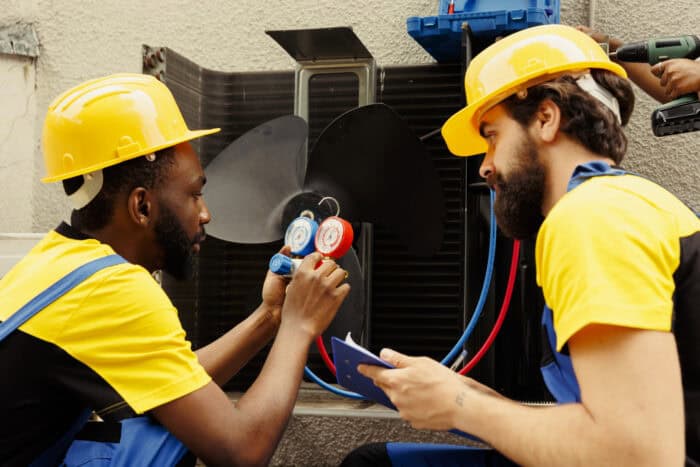
It is the middle of July, the afternoon sun is beating down on the roof, and you suddenly realize the air coming from your ceiling vents is completely lukewarm. The house is heating up fast. Your first instinct is probably to grab a flashlight, walk outside to the equipment, and see if you can quickly fix the problem yourself. After all, there are thousands of video tutorials online promising to teach you how to bypass a broken part or recharge your own system.
But acting on that instinct is incredibly dangerous. Modern cooling systems are not simple appliances. They are highly pressurized, chemically charged, high-voltage machines. Attempting a DIY fix on a major component is a fantastic way to turn a minor mechanical hiccup into a totally destroyed unit, or worse, a severe physical injury. When your home is losing the battle against the summer heat, calling for professional air conditioner repair is the only smart move. It protects your warranty, your wallet, and your safety.
Here are the most common mechanical failures where you absolutely must put the screwdriver down and let a certified technician take the lead.
The Frozen Evaporator Coil
Finding a thick block of solid ice encasing the pipes outside or the indoor unit in your attic is a bizarre sight in the middle of a sweltering summer. The immediate temptation is to chip the ice away with a tool or melt it with a hairdryer and turn the system back on.
Ice formation means the system is either severely starved for airflow or completely starved for chemical refrigerant. If it is a refrigerant issue, you have a leak. Refrigerant is a heavily regulated environmental substance. You cannot legally buy it without an EPA certification, and you certainly cannot find a microscopic pinhole leak in fifty feet of tubing by just looking at it. A professional technician has to use an electronic sniffer or ultraviolet dye to locate the exact leak, use an oxyacetylene torch to braze the copper shut, pull a deep vacuum on the entire line set, and weigh in the exact factory charge. You simply cannot do this with household tools.
The Capacitor Failure
If you walk outside and your outdoor unit is completely silent except for a loud, angry humming or buzzing noise, the fan motor and the compressor are failing to start. The most common culprit is a dead dual-run capacitor. This small, silver, cylindrical part gives the motors the massive jolt of electricity they need to start spinning.
Because capacitors are relatively inexpensive, many homeowners try to order a replacement online and wire it up themselves. This is a massive physical risk. A capacitor is essentially a heavy-duty battery that stores lethal amounts of electrical voltage, even after you have completely shut off the power at the main breaker panel. If you touch the wrong terminals, that stored energy discharges directly into your hand. A trained professional knows exactly how to safely short out and discharge the component, test the microfarads with a multimeter, and install the new part without accidentally crossing wires and frying the expensive fan motor.
The Relentless Tripped Breaker
Sometimes, a cooling system will simply refuse to run, and you will find that the dedicated switch in your main electrical panel has flipped. Flipping it back on once is fine. But if it immediately trips again the second the outdoor unit tries to kick on, you have to stop resetting it immediately.
Circuit breakers are designed to prevent your house from catching on fire. If it keeps tripping, the compressor—the massive, expensive heart of your cooling system—is likely pulling locked rotor amps, or the internal wiring has shorted directly to the metal casing. Forcing the breaker back on over and over will eventually melt the wiring harness or start an electrical fire. Diagnosing a grounded compressor requires a technician to use a specialized megohmmeter to read the insulation resistance of the internal copper windings. It is a highly technical diagnostic process that cannot be bypassed.
The Indoor Ceiling Flood
Your cooling system acts as a massive whole-house dehumidifier, pulling gallons of water out of the air every single week. That water collects in a drain pan and flows outside through a narrow plastic pipe. Over time, that pipe builds up a thick layer of biological sludge and algae, eventually forming a solid plug.
When the water backs up, it overflows the pan. If your indoor unit is in the attic, that water goes straight through your drywall, ruining your ceiling and your floors. You might try sticking a wet vacuum on the end of the outside pipe, but that rarely clears a hard clog buried deep inside the primary pan. Professionals use tanks of high-pressure nitrogen to aggressively blast the entire line clear. More importantly, they check the safety float switches to ensure that if the pipe ever clogs again, the system automatically shuts itself off before the water can damage your house.
The Screaming Fan Motor
If your outdoor unit sounds like metal grinding violently against metal, the bearings inside the condenser fan motor have disintegrated. The fan is struggling to pull air through the aluminum fins to release the heat from your house.
Spraying the top of the fan blade with household lubricating oil will do absolutely nothing, as the motor housing is completely sealed from the factory. The entire motor has to be physically removed and replaced. A technician must carefully match the horsepower, the rotational direction, and the exact RPMs of the original motor. If you install a generic motor with the wrong specifications, or if you fail to balance the fan blade perfectly when reassembling the unit, the equipment will literally vibrate itself to pieces.
Reach Out to an AC Professional
It is totally fine to change your own air filters or swap out the batteries in your thermostat. But when the actual mechanical and electrical components of your cooling system start failing, you have to respect the machinery. Trying to save a few dollars by watching a tutorial and wiring up a high-voltage part usually results in a completely destroyed system that costs ten times more to fix. Leave the pressurized chemicals and the heavy electrical diagnostics to the people who do it for a living, and focus on staying cool while they get your house back to normal.