


The United States recorded $133 billion in total economic losses from natural disasters in 2025. Insurers covered $93 billion of that damage. The remaining $40 billion fell on property owners, businesses, and communities whose policies failed to cover the full extent of what the storms took from them. That $40 billion shortfall, in a year when no hurricanes made U.S. landfall, represents one of the most consequential and underreported dimensions of America’s worsening disaster crisis.
To understand the scale of that coverage gap, it is important to consider what was absent from the 2025 season. A new study from Barcus Arenas, takes a look at the impact of storms. Hurricane activity, which typically accounts for a substantial share of disaster costs along the Gulf and Atlantic coasts, did not materialize in 2025. It was the first year since 2015 in which no hurricane struck the U.S. mainland. That absence almost certainly prevented the annual loss total from reaching or exceeding the record-setting levels of 2023 and 2024. And yet, even without hurricane losses factored in, insured coverage fell $40 billion short of the actual economic damage sustained.
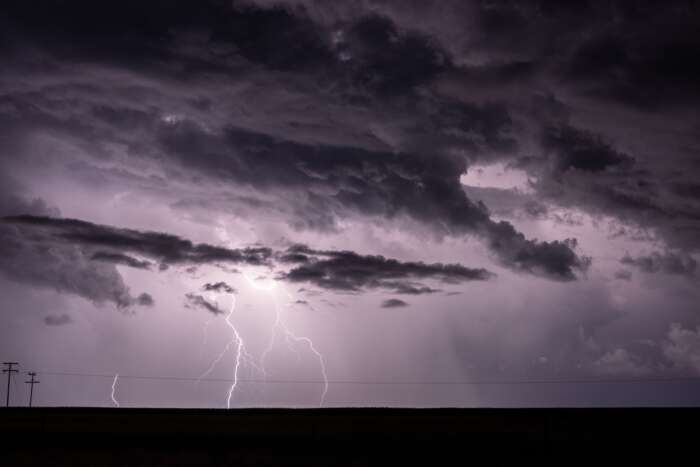
The events that drove the coverage gap were not exotic or unprecedented. They were the same categories of weather that have dominated the American disaster calendar for years: severe convective storms, including hail, tornadoes, and straight-line winds; inland flooding; wildfires; and prolonged drought and heat events. These are the perils that define the new normal for commercial and residential property owners across the Extreme and High-tier states identified in the 2025 Storm Stress Index, and they are the perils that the insurance industry is most rapidly deprioritizing.
Unlike hurricanes, which provide days or weeks of advance warning and allow for pre-loss preparation and coordination, convective storm events unfold with little notice. Hailstorms, tornadoes, and derechos generate concentrated, sudden damage across specific corridors and communities, producing waves of simultaneous claims that insurers are increasingly motivated to dispute, delay, or underpay. The result is a claims environment in which the burden of proof falls disproportionately on the property owner, and where settlement offers routinely fall short of actual repair and replacement costs.
The commercial real estate insurance market reflects these dynamics with particular clarity. According to research by the Deloitte Center for Financial Services, the average monthly commercial real estate insurance cost per building nearly doubled over the past decade, rising from $1,558 in 2013 to $2,726 by the end of 2023. In the ten states carrying the highest expected annual loss totals, that trajectory has been even steeper: a 108 percent increase over five years and year-over-year increases of up to 31 percent in the most exposed markets.
Those figures represent the baseline. Deloitte’s projections for the decade ahead paint an even more challenging picture. Monthly per-building insurance costs in the highest-risk states are forecast to climb from $3,077 in 2026 to $6,062 by 2030, a compound annual growth rate of 10.2 percent. For commercial property owners in Texas and California, both facing their own compounding risk profiles, those projected cost increases translate directly into compressed operating margins, reduced asset values, and structurally higher cost burdens that must be absorbed or passed on.
The problem is compounded by the direction insurers are taking in response to escalating losses. Rather than increasing capacity or improving claims efficiency in high-risk markets, many carriers have responded by narrowing coverage terms, raising wind and hail deductibles, and in some markets withdrawing from commercial property lines altogether. The net effect is that property owners in the states most exposed to storm damage are simultaneously facing higher premiums and receiving less comprehensive coverage in return.
For the broader U.S. economy, the trajectory of the storm coverage gap carries significant systemic implications. When property losses routinely exceed insured values, the financial burden of recovery shifts to individuals, businesses, municipalities, and, ultimately, federal disaster relief programs. That shift depresses post-disaster economic recovery, extends timelines for rebuilding, and concentrates long-term financial harm on the communities and property owners least equipped to absorb it without adequate coverage.
The $40 billion shortfall recorded in 2025 is not an anomaly born of unusual circumstances. Insured losses from natural catastrophes have been rising at an average annual rate of 5 to 7 percent in real terms for decades. The gap between economic losses and insured losses has widened alongside that trend, and the structural forces driving that divergence — more intense storms, higher property values, expanding development in high-risk zones, and tightening insurance markets — show no signs of reversing. For property owners, risk managers, and lenders operating in any of the states featured in the 2025 Storm Stress Index, the coverage gap is no longer a background risk to be noted and managed. It is a present, material financial exposure that demands active attention.