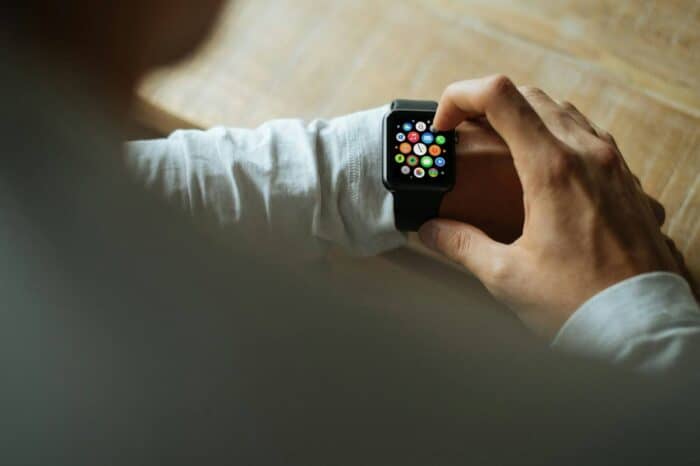
Digital health tools have become a common part of everyday life. Many people now use smartphones, smartwatches, fitness trackers, and health apps to monitor steps, heart rate, sleep, blood sugar levels, and even symptoms such as pain or mood. A recent global survey found that 53.7% of respondents use wearable devices to monitor fitness activity, highlighting how widespread these tools have become. The information collected through these technologies is known as patient-generated health data. While this data has the potential to improve healthcare, validating it remains a significant challenge.
Patient-generated health data is collected outside traditional clinical environments. Unlike measurements taken during a doctor’s visit or laboratory test, this data is recorded during daily life. As a result, accuracy can be difficult to guarantee. Devices may give incorrect readings due to technical issues, poor calibration, or improper use. For example, a wearable device worn incorrectly may record an inaccurate heart rate. If healthcare professionals rely on faulty data, it could lead to misinterpretation or unnecessary medical action.
Another major challenge is inconsistency across devices and platforms. Different apps and wearables often use different sensors, algorithms, and definitions. One app may measure physical activity or sleep quality in a different way than another. Even updates to a single device can change how data is calculated. This lack of standardization makes it difficult to validate patient-generated health data and to compare results across time or between individuals.
User behavior also has a strong impact on data quality. People may forget to wear their devices, stop tracking for extended periods, or enter information incorrectly. Some users may unintentionally overreport or underreport symptoms based on how they feel, while others may only track data when something seems wrong. These patterns create gaps and bias that complicate validation efforts.
Experts working closely with clinical research have noted these challenges. Dinkar Sindhu, CEO of AXIS Clinicals, has emphasized that while patient-generated data offers valuable real-world insight, it must be carefully evaluated before being used in clinical decision-making. It has been pointed out that without proper validation frameworks, even large volumes of data can lead to misleading conclusions rather than better care.
Context is another key issue. Patient-generated health data often lacks information about what was happening at the time it was recorded. A sudden increase in heart rate could result from exercise, stress, illness, or a device error. Without this context, healthcare providers may struggle to interpret the data accurately. Clinical data is usually collected under controlled conditions with professional documentation, while patient-generated data often stands alone.
Privacy and trust also affect validation. Validating patient-generated health data may require linking it with medical records or other datasets, raising concerns about data security and confidentiality. If patients are unsure how their data will be used or protected, they may be less willing to share complete or accurate information, reducing its reliability.
Finally, integrating patient-generated health data into healthcare systems remains difficult. Many electronic health record systems are not designed to handle continuous streams of patient data. Clinicians may feel overwhelmed by the volume of information and uncertain about how to validate or prioritize it. Without clear standards and guidance, useful data may be ignored.
Despite these challenges, patient-generated health data remains a valuable resource. Its growing use offers insight into daily health experiences that traditional clinical visits cannot capture. By improving device standards, educating users, strengthening privacy protections, and developing clear validation methods, healthcare systems can better use this data to support informed decisions, early intervention, and more personalized care.