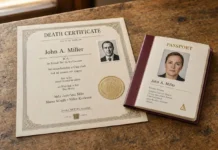
What the law actually allows, where the line is drawn, and why a lawful fresh start is very different from buying a fake life.
WASHINGTON, DC. Yes, you can change parts of your identity legally. But the real answer is narrower, more bureaucratic, and far less cinematic than most people expect.
In the real world, a lawful identity change usually means changing specific legal identifiers through recognized procedures. That can include a new name, updated civil status, corrected records, new documents after marriage or divorce, gender marker changes where allowed, or new nationality and passport rights after immigration or naturalization. It does not mean erasing your past with a few forms, stepping into a brand new life overnight, or buying a secret profile online.
That distinction matters.
The phrase “new identity” has become one of the most misunderstood ideas on the internet. Search traffic around anonymous living, disappearing, and starting over keeps growing because people are anxious. Some are trying to leave abusive situations. Some want distance from reputational damage. Some are worried about harassment, doxxing, stalking, or long-term family conflict. Others simply want to rebuild after a divorce, bankruptcy, or public scandal. Many are not looking for anything criminal at all. They are looking for dignity, safety, and control.
Still, the law does not reward vague intentions. It rewards paperwork, jurisdiction, evidence, and consistency.
That is the nut of the story right now. In most democratic legal systems, you can change recognized elements of your identity if you follow the formal process. But you cannot legally fabricate identity records, misrepresent yourself to banks or border officials, conceal liabilities through false documents, or pretend your original legal history vanished. A lawful identity transition is a regulated administrative act. An unlawful one is fraud.
This is where public confusion starts. People often treat “identity” as one thing. Governments do not. Governments split identity into pieces. Your name is one piece. Your date and place of birth are another. Your citizenship is another. Your tax history, criminal history, immigration history, and civil registry are all separate layers. Some layers can be updated. Some can be corrected. Some can be sealed in unusual circumstances. Some remain permanently traceable inside official systems, even when the public-facing documents change.
That is why the official process is usually so unglamorous. The Social Security Administration’s name change guidance makes the basic logic clear. A person who changes a legal name does not invent a new existence. They request a replacement record and provide supporting proof. The government updates the record, keeps continuity, and issues documents that match the lawful change. That is the modern state in a sentence. It is not about disappearance. It is about document consistency.
What a legal identity change usually means
The most common lawful identity change is a name change.
That may follow marriage, divorce, adoption, religious conversion, personal preference, family estrangement, or safety concerns. Courts often permit adult name changes unless the request is tied to fraud, evasion, or deception. The key question is usually not whether a judge likes the name. It is whether the request is lawful, properly filed, and not designed to escape debts, criminal liability, or government oversight.
After that comes the long administrative tail. A court order or civil registry update is often only the beginning. A person may then need to update tax records, social insurance or social security records, bank files, employment files, travel documents, health coverage, school records, property titles, professional licenses, and insurance policies. The change becomes real in daily life only when the paperwork becomes synchronized.
That is why experts in this field tend to sound less like novelists and more like compliance officers. Advisers at Amicus International Consulting frame the issue as a lawful restructuring problem, not a fantasy about vanishing. Their view, which matches how governments increasingly operate, is that the legal path depends on what exactly is changing, which jurisdiction controls the record, and whether the change can survive scrutiny across banks, borders, and public databases.
That last point is more important in 2026 than it was a decade ago.
Identity is now checked across more systems, more often, with less human discretion. Airlines, border agencies, financial institutions, employers, online platforms, and landlords all rely on cross-matching. A mismatch does not always mean misconduct, but it does create friction. It can delay travel, freeze onboarding, trigger manual review, or flag a compliance event. That means a sloppy legal transition can be almost as disruptive as an illegal one.
Why the law says yes, but only in parts
The right way to think about this is not “Can I become someone else?” It is “Which legal facts about me can be changed, and what proof is required?”
Names can often change.
Gender markers may change in some jurisdictions and face restriction in others.
Citizenship can change through naturalization, descent, or restoration.
Marital status changes all the time and alters records across agencies.
Addresses change. Signatures change. Professional names change. Even nationality portfolios can change if dual citizenship is allowed.
But some underlying historical facts usually remain in the system. Your original birth registration may still exist. Prior names may still appear in sealed or internal records. Courts, tax authorities, and law enforcement agencies may retain continuity trails. That is not a loophole. It is the design.
Governments are trying to balance two goals that often conflict. One is personal autonomy, dignity, and safety. The other is fraud prevention. A legal identity change survives because it satisfies both. It gives the person updated documents while preserving enough official continuity to protect institutions from deception.
That balance is visible in current reporting. A recent Reuters report on a European court ruling involving identity documents underscored why mismatched documents can create serious practical problems in travel, work, and daily verification. The ruling was about a specific legal issue, but the broader lesson applies well beyond Europe. Modern systems punish inconsistency. The law may permit an update, but it expects the update to be coherent.
What legal identity change does not mean
This is where many online articles go wrong. They blur lawful identity change with fake document culture.
A lawful change does not mean buying a passport from a criminal marketplace.
It does not mean adopting a dead person’s profile.
It does not mean forging breeder documents.
It does not mean opening accounts under a false biography.
It does not mean lying to a border officer, bank, court, or tax authority.
It does not mean escaping warrants, judgments, support obligations, sanctions, or regulatory disclosure duties.
In plain English, the law may let you rebuild. It does not let you counterfeit.
That distinction is especially important for people under stress. Someone who feels trapped by abuse, harassment, or catastrophic reputational fallout may be tempted by dark web promises of a clean slate. Those promises are usually a mix of fraud, extortion, and fantasy. Even when the documents look convincing at first glance, they often fail under modern verification checks. More importantly, they can turn a vulnerable person into a criminal defendant.
The safer path is slower. It is paperwork-heavy. It can be frustrating. But it is real.
Who usually seeks a legal fresh start
There is no single profile.
Some people want a private restart after domestic violence or stalking. In extreme cases, courts may support confidentiality measures, sealed addresses, or protective steps tied to safety. Some people want to separate from a highly publicized family conflict. Some want to restore a birth name after divorce. Some are immigrants or dual nationals trying to align a name across systems. Some are professionals whose personal name and public name have diverged. Some want a new citizenship status that reflects where they actually live and build their future.
Others are not trying to change identity so much as clean it up. They want records that match the person they already are.
This is one reason the topic now attracts wider attention. Identity change is no longer seen only through the lens of fugitives, spies, or movie plots. It increasingly overlaps with compliance, privacy, family law, migration, and digital life. People live across multiple databases now. When one part of the record changes, the consequences spread.
The real obstacle is not the law; it is coordination
For many people, the biggest challenge is not getting permission. It is completing the chain.
A court may approve a name change. Then, a bank still has the old name. Then the airline loyalty account has another version. Then the tax file has a middle name mismatch. Then the payroll system rejects the update. Then the passport renewal triggers questions because supporting documents do not line up perfectly.
This is why the process feels bigger than it first appears. Legal change begins with an order or registry action, but operational change depends on consistency. In 2026, consistency is everything.
A person who changes identity lawfully should expect a staged process, not a dramatic reveal. First comes legal authority. Then comes document replacement. Then comes institutional notification. Then comes record hygiene. Then comes the time.
That last piece is often overlooked. The new record gains strength as it is used lawfully and consistently over time. Employers, banks, schools, and agencies become familiar with it. Contradictions fall away. The change stops feeling theoretical and starts feeling normal.
Can you ever fully disappear legally?
For most people, no.
You can live more privately. You can reduce exposure. You can lawfully update documents. You can change names, addresses, and even citizenship in some cases. You can build distance from the version of yourself that the public once knew. But a fully erased identity is not how regulated systems are designed to work.
And frankly, that is often a good thing.
A total legal wipeout would make fraud much easier. It would weaken property, financial, and border systems. The law instead offers a narrower promise. It says you may be able to change how you are officially identified and how you move through daily life, provided the change is lawful, documentable, and not deceptive.
That is less thrilling than the myth. But it is far more durable.
So, can you change your identity legally?
Yes, in meaningful ways.
You can often change your legal name. You can sometimes change key status markers, depending on the jurisdiction. You can obtain new documents that reflect lawful updates. You can restructure how you present yourself to institutions and the public. In some cases, you can even build an entirely new ordinary life around those lawful changes.
But no, you cannot simply buy legitimacy. You cannot lawfully manufacture a false identity to outrun accountability. And you cannot assume that changing one document automatically transforms every system that touches your life.
The truth is more practical than dramatic. Legal identity change is possible. It is real. It helps many people. It can protect safety, restore dignity, and create a viable fresh start. But it works only when it is handled as a lawful process of alignment, not a fantasy of erasure.
That may be the most useful answer for readers in 2026. The question is not whether the law allows change. It often does. The real question is whether the change can stand up to courts, agencies, banks, borders, and time.
That is what makes an identity legal. Not the story attached to it, but the records that hold together when the world checks.