What a black passport actually does at borders, airports, and official checkpoints.
WASHINGTON, DC
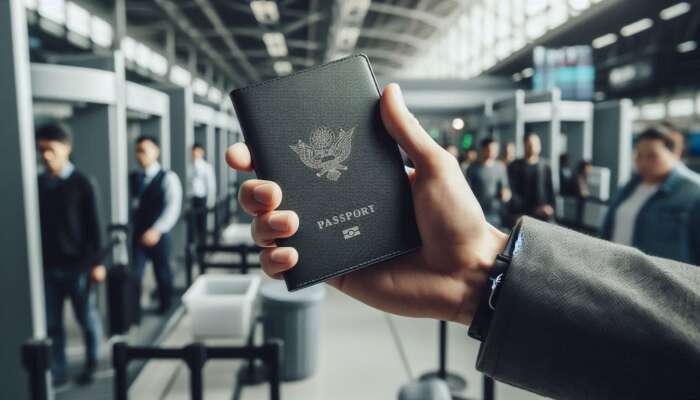
A black passport changes the atmosphere before it changes anything else. At a border counter, it signals official business. At an airport, it suggests rank, protocol, and possible access to a different lane. At an official checkpoint, it can make frontline staff pause, look twice, and shift from routine travel processing to a more formal review.
That image has helped create one of the most persistent myths in international travel, the belief that a diplomatic passport is a near-magical document that softens borders, short-circuits questioning, and places its holder above the normal frictions of movement. The truth is much narrower and much more useful.
A black passport does not erase the checkpoint. It does not automatically wipe away customs law, immigration law, airport screening, or frontline scrutiny. What it really does is identify the traveler as someone who may be traveling in an official capacity for a state, which can trigger a different legal and administrative process. In practical terms, the passport changes the framework. It does not end the framework.
The black passport is a signal document first.
The first thing a black passport does is tell officials that the person presenting it may not be traveling as an ordinary private citizen. That matters because border systems are built on classification. Officers do not simply ask who a person is. They ask what legal category the person belongs to. Tourist. Business visitor. Student. Resident. Returning citizen. Official delegate. Diplomat.
A regular passport usually places the holder into the ordinary stream of international travel. A diplomatic passport moves the traveler into a more specialized category at first glance and on the first scan. That does not guarantee better treatment in every circumstance, but it almost always guarantees different treatment.
The U.S. government’s special issuance passport guidance frames this clearly. These passports are issued for official or diplomatic duties, not for general personal travel, and they remain government property. That language matters. A black passport is not a luxury edition of a standard travel document. It is a work instrument tied to a state function.
That is why officers notice it. The booklet tells them the traveler may be operating within a government-to-government framework rather than a purely private one.
It can change the lane, but it does not eliminate the process.
This is where fantasy usually outruns law. Many people assume that holding a black passport means skipping control altogether. In the real world, what usually happens is more structured than that. The traveler may be handled differently, but not ignored.
At some airports, diplomatic passport holders are routed to separate counters. In some countries, senior officials are met by protocol staff. In some official visits, arrivals are handled more quietly and more quickly than the ordinary passenger flow. But all of that still belongs to the control system. It is not proof that the control system has disappeared.
That distinction is the key to the subject. A diplomatic passport can place a traveler into a different administrative lane, but it does not create a law-free corridor through an airport. There may be courtesy. There may be speed. There may be discretion. None of that is the same thing as invulnerability.
That is also why experienced diplomats and officials tend to talk about process rather than magic. They understand that what makes official travel smooth is usually preparation, recognition, and coordination, not the passport alone.
Immigration officers care about purpose, not just paper.
Once a black passport is on the counter, immigration officers are usually looking beyond identity. They want to know what official character the document is meant to support. Is the traveler accredited to a mission? Is the visit official or private? Does a diplomatic or official visa apply? Has the host government been notified? Does the individual’s role fit a recognized category?
This is one reason a diplomatic passport can sometimes create more legal complexity than a regular passport. A tourist passport usually fits neatly into public visa and entry rules. A diplomatic passport may raise a second layer of classification questions because the officer is now considering not just nationality and admissibility but also status and official purpose.
The same booklet can therefore produce very different outcomes depending on context. A properly accredited diplomat arriving on recognized official business may move through a specialized channel with little friction. A holder of a diplomatic passport traveling privately, without the surrounding protocol structure, may still face ordinary questioning and ordinary delay.
The passport matters, but the mission matters more.
Immunity comes from legal status, not from the booklet by itself.
The biggest misconception attached to black passports is that they somehow generate immunity merely by being presented. They do not. Real diplomatic protection turns on assignment, accreditation, recognition, and the legal role the traveler actually holds.
That distinction is often missed outside professional circles, which is why analyses such as Amicus International Consulting’s breakdown of diplomatic passports and immunity keep returning to the same point. Possession of a diplomatic passport is not the same thing as recognized diplomatic immunity. A traveler may carry the document and still not enjoy the full protections people imagine if the host state does not recognize the relevant status in the relevant context.
That is one reason the black passport carries so much mystique and so much confusion at the same time. It is a powerful symbol, but symbols do not control airports by themselves. Law does. Recognition does. Official role does.
This is also why governments keep diplomatic passports under tight control. They are issued for state work, not personal glamour. They signal status, but they are not supposed to create status out of thin air.
Customs is more bureaucratic than the myth suggests.
Customs is one of the clearest places where public fantasy breaks down. Popular culture treats diplomatic travel as if luggage simply glides through untouched once the black cover appears. Real customs systems are more administrative than cinematic.
In practice, customs treatment usually depends on how the host state classifies the traveler and what privileges attach to that classification. Recognized mission staff or accredited officials may receive particular handling, but that handling usually depends on more than the passport alone. It can depend on diplomatic or official visa status, formal notification through protocol channels, and the host country’s own internal rules on customs privileges.
That means the passport often supports a claim rather than settling the question by itself. If the surrounding diplomatic relationship is clear and properly documented, customs handling may be easier, more discreet, or more structured. If the status is unclear, the document may do much less than outsiders expect.
That is why serious systems separate categories carefully. Not everyone with a black passport gets the same treatment. Not every official traveler is in the same class. Not every mission employee is equal under customs rules. States preserve the credibility of diplomatic handling by making those distinctions real.
Airport security is usually the least glamorous part of the story.
Security checkpoints tend to strip the mythology away fastest. Security officers are trained to apply procedure. They are not there to participate in status theater.
A black passport can sometimes change routing, especially when very senior officials are moving under tightly managed protocol. It can sometimes mean that security screening is organized differently or handled with more discretion. But that is still a function of planning and state coordination. It is not a sign that security logic has vanished.
This is why official guidance is so blunt about the limits of special passports. A black passport does not, by itself, give the holder the right to ignore checkpoints or bypass security instructions. In practical terms, smooth diplomatic movement usually happens when the surrounding system is already working well. Protocol offices have done the advance work. Notifications have been sent. The host side knows who is arriving and why.
Without that framework, even an official traveler can find the experience surprisingly ordinary. Delay, confusion, and awkward pauses are still possible, because frontline control is still frontline control.
Sometimes the black passport creates more scrutiny, not less.
There is another side to the black passport that rarely gets explained clearly. It can open doors, but it can also attract attention. In some settings, officials respond to diplomatic status with courtesy. In others, they respond with heightened formality and closer review.
That makes sense. A diplomatic document signals possible state business, legal sensitivity, and political consequences. For some authorities, that means quicker handling. For others, it means more careful handling. The same symbol can produce speed in one setting and scrutiny in another.
That is why seasoned diplomats often treat the document with respect rather than with bravado. They know it can raise the traveler’s category while also increasing the importance of every procedural decision around them. It can make a journey smoother, but it can also make mistakes, protocol failures, or political tension more consequential.
A memorable example came when Enrique Mora said he was briefly held at Frankfurt airport while traveling with a Spanish diplomatic passport after an official trip, an incident covered by Reuters. Whatever view one takes of the legal details, the episode showed a practical truth that glossy assumptions often miss. A diplomatic passport can signal status and still leave its holder very much inside the machinery of enforcement.
That is not a contradiction. It is the system behaving like a system, formal, imperfect, and sensitive to context.
The real power of the black passport is procedural.
What the black passport most reliably changes is the procedure. It can alter what officers assume at first contact. It can move the traveler into a protocol-aware lane. It can change which documents are expected. It can affect whether official visa rules apply. It can influence how customs and immigration classify the arrival.
That is significant. Procedure is where many real travel outcomes are decided. A document that shifts a person into a different procedure can materially change the experience of crossing a border. But procedure is not the same thing as immunity, and it is not the same thing as blanket exemption from control.
This is why black passports are often misunderstood by people outside government and treated more carefully by people inside it. Outsiders focus on appearance. Insiders focus on recognition, routing, permissions, and risk.
Why the distinction matters more now.
In an era of tighter watch listing, stronger data-sharing, and more integrated border screening, the difference between symbolic power and legal effect matters more than ever. A black passport still carries visual weight, but modern border systems increasingly rely on pre-arrival information, status verification, and digital records, not just the booklet itself.
That is also why lawful mobility planning should not be confused with diplomatic documentation. The world of official passports is narrow because governments intentionally keep it narrow. The world of private second-citizenship and second-passport strategy is something else entirely, which is why Amicus International Consulting’s second passport services treat diplomatic status and lawful private mobility planning as separate legal conversations rather than interchangeable shortcuts.
That distinction is worth keeping sharp. Diplomatic status belongs to a public function. Private mobility planning belongs to personal legal strategy. Confusing the two is where many of the loudest myths begin.
So, what does the black passport actually do?
It tells officials this may be an official traveler.
It can move the person into a different administrative lane.
It can affect visa treatment, customs handling, and protocol arrangements.
It can support a claim to privileges connected to recognized status.
What it does not do is automatically silence immigration officers, erase customs law, cancel airport screening, or create immunity out of thin air.
That is the real answer behind the black passport mystique. It changes the framework, not the existence of the framework. It can soften the process when the surrounding legal status is real, recognized, and properly managed. It can complicate the process when the surrounding status is unclear, politically sensitive, or thin.
In the end, the black passport is not a get-out-of-rules card. It is a state signal, powerful in the right hands, limited in the wrong context, and always less magical than it looks from across the counter.