


We all love a good Saturday morning trip to the local big-box home improvement warehouse. It is the perfect place to grab a few gallons of primer, a box of drywall screws, or a new string trimmer. It is convenient, brightly lit, and built entirely around the concept of cheap, mass-produced volume. But when it comes to the architectural soul and structural integrity of your house, prioritizing convenience is a massive trap.
If you are restoring a historic bungalow, designing a whimsical Storybook cottage, or building a high-end estate, walking down the commercial building materials aisle is the fastest way to ruin your home’s aesthetic. You simply cannot buy true custom roofing shingles from a place that also sells lawnmowers and bulk paper towels.
Roofing is the crown of your home. It dictates the entire personality of the property. Here is exactly why trying to source a bespoke, custom roof from a retail giant is a costly mistake that will leave your home looking flat and uninspired.
1. The Special Order Deception
If you walk up to the contractor desk at a major hardware chain and ask for custom shingles, they will likely hand you a catalog and point you toward their special order program.
Do not let the terminology fool you. In the big-box retail world, “custom” rarely means bespoke craftsmanship. It usually just means “a slightly different color of mass-produced asphalt that we don’t currently have stacked on a pallet in the back room.”
True custom roofing involves actual millwork. It means specifying the exact species of wood, requesting specific thicknesses, and having the shingles physically steam-bent to match the swooping curve of a turret or an eyebrow dormer. A retail warehouse is built on standardized SKUs and bar codes; they do not have the supply chain or the capability to manufacture a roof tailored to the specific geometry of your house.
2. The Death of Architectural Integrity
Historic and high-end homes were not built using a cookie-cutter mentality. They feature intricate details that demand equally intricate roofing materials.
- Victorian Homes: Require decorative, fancy-cut shingles—like fish scale, diamond, or half-cove patterns—to match the ornate siding.
- Craftsman Bungalows: Demand heavy, rugged, hand-split cedar shakes that look pulled directly from the earth.
- Cotswold Cottages: Need steam-bent shingles that roll over the eaves to create a soft, thatched-roof illusion.
Big-box stores cater to the 95% of modern suburban tract homes that just need flat, uniform rectangles. If you try to force a standardized, warehouse-grade material onto a historic or heavily stylized home, it completely shatters the illusion. The house immediately looks like a cheap reproduction instead of a genuine piece of architecture.
3. Material Grading and the Fast-Growth Problem
Let’s say you do find a big-box store that stocks natural wood shingles, like cedar. You still shouldn’t buy it.
The business model of a mega-retailer relies on incredibly tight margins and massive volume. To keep prices low, they source their lumber from commercial, fast-growth tree farms. Fast-growth cedar has wide grain patterns. Because the wood grows quickly, it is inherently less dense, making it highly susceptible to curling, splitting, and rotting after just a few years of harsh weather.
A dedicated, specialized roofing mill operates entirely differently. They source premium, old-growth, or high-density vertical-grain cedar. The growth rings are incredibly tight, meaning the wood is naturally dense, weather-resistant, and built to last for decades. When you buy from a warehouse, you are trading decades of lifespan for a cheaper upfront price tag.
4. The Expertise Vacuum
Roofing an intricate, custom home is part science and part art form. When you purchase directly from a specialty mill or a custom shingle manufacturer, you are talking to experts who live and breathe timber. They can tell you exactly how a specific cut of Alaskan Yellow Cedar will weather in a humid coastal climate versus a dry mountain environment. They can calculate exactly how much overlap you need for a steeply pitched gable.
The employee wearing the orange or blue vest at the hardware store is doing their best, but they are a retail worker, not a millwright. They might have been mixing paint or stocking plumbing fixtures an hour ago. They cannot provide the deep, localized, material-specific expertise required to guarantee your roof won’t fail in five years.
5. The Lowest-Bidder Installation Network
Finally, big-box stores heavily push their “in-house” installation services. You buy the materials from them, and they send a crew to install it.
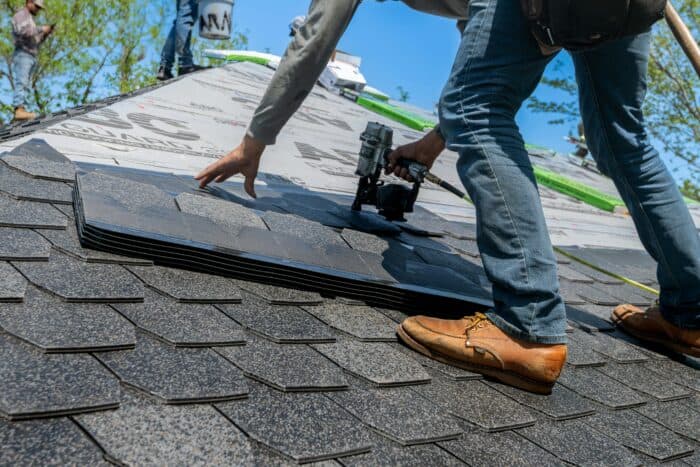
These stores do not employ master carpenters. They subcontract the work out to local volume-based roofing crews who bid the lowest price to get the contract. These crews are trained to rip off old asphalt and staple down new asphalt as quickly as humanly possible so they can move on to the next house.
Installing a custom wood, slate, or steam-bent roof requires patience, old-world carpentry skills, and specialized tools. If you hand high-end, custom materials to a volume-based crew, they will likely install them incorrectly, voiding any manufacturer’s warranty and leading to massive leaks down the road.
Custom Architecture
A custom roof is a significant financial investment and a defining architectural statement. It is not a weekend DIY project, and it is not a standardized commodity.
Trying to squeeze a bespoke vision through the rigid, volume-driven supply chain of a big-box store will only lead to compromised materials, inaccurate historical profiles, and frustrating installations. If you want a roof that stops traffic and lasts a lifetime, bypass the retail warehouse entirely. Go straight to the craftsmen who actually know how to mill the wood.