


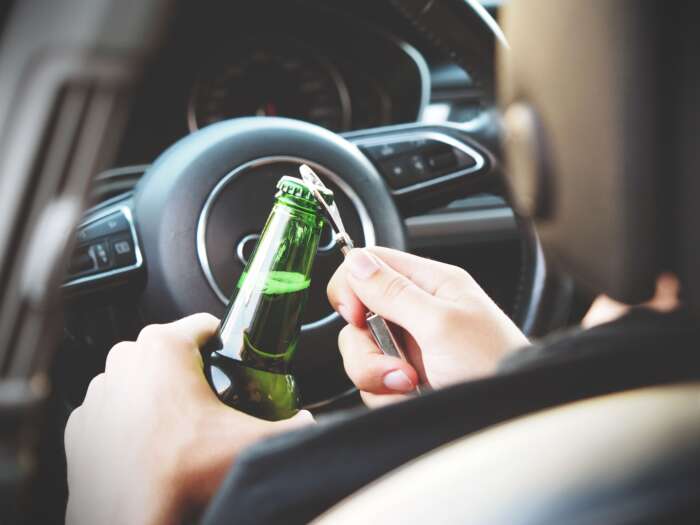
Drunk driving is often treated as a series of bad individual choices. A new analysis from Siegfried & Jensen of federal traffic, health, and enforcement data suggests it has more to do with untreated alcohol use disorder (AUD) and a proven prevention tool that too few offenders use. The study finds that 68% of the 11,904 alcohol impaired traffic deaths in 2024 involved a driver with a blood alcohol concentration of .15 or higher. That is almost twice the legal limit and the level NHTSA considers severe impairment.
The difference between .08 and .15 is large. At .08, a driver already has impaired balance, vision, reaction time, judgment, concentration, speed control, and hazard awareness, and is about four times as likely to crash as a sober driver. At .15, those problems become severe, and the estimated crash risk rises to twelve times that of a sober driver, with some research putting it even higher. Most people involved in fatal drunk driving crashes are well past the point of being slightly over the limit.
AUD helps explain why severe impairment is so common. According to the 2024 National Survey on Drug Use and Health, 27.9 million Americans aged 12 and older had AUD in the past year, including 27.1 million adults. Rates were higher for men than for women (12.9% vs. 8%) and highest among adults aged 18 to 25 (14.4%). Under the DSM 5 criteria used by NIAAA, AUD is a spectrum: two or three symptoms indicate mild AUD, four or five moderate, and six or more severe. Only 2.1 million people with AUD received treatment in the past year, about 7.5% of those affected.
AUD and impaired driving are closely linked. Research shows that 33% to 50% of first-time drunk driving offenders meet AUD criteria, rising to 60% to 84% among repeat offenders. Enforcement data shows the same pattern. Roughly a third of the 705,761 DUI arrests recorded by the FBI in 2024 involved repeat offenders. NHTSA data shows that drivers with a prior DUI conviction are 4.1 times as likely to be involved in a fatal crash as drivers who have never been convicted. Among drivers at .08 BAC or higher in fatal crashes, 6% had a previous drunk driving conviction, compared with 2% of sober drivers.
The consequences reach far beyond the impaired driver. Drunk drivers made up 61% of those killed in 2024. The remaining 39% were passengers, people in other vehicles, pedestrians, and cyclists. MADD, founded in 1980 by Candace Lightner after her 13-year-old daughter Cari was killed by a repeat drunk driver, has since provided free support to nearly a million victims and survivors.
The study highlights one countermeasure that is proven, affordable, and underused. Ignition interlock devices require a driver to pass a breath test before the vehicle will start. A CDC review of 15 studies found that they reduce repeat DUI offenses by up to 70%, and NHTSA gives them its highest effectiveness rating. Even so, a GAO investigation found that only 15% to 20% of convicted DUI offenders install them. That means most offenders at the highest risk of driving drunk again, a group in which up to 84% meet AUD criteria, have no device in their vehicle to stop them.
Cost is not a strong reason for the gap. Interlocks typically cost offenders $70 to $100 per month, a small fraction of what it costs to incarcerate a repeat offender each year. The study concludes that low interlock use is both a public safety failure and a missed chance to save money. It also argues that enforcement alone can’t fix a problem so closely tied to a medical condition that most people never get treated for. Arrests, treatment access, and interlock compliance all need to work together to reduce the 32 drunk driving deaths that happen every day.