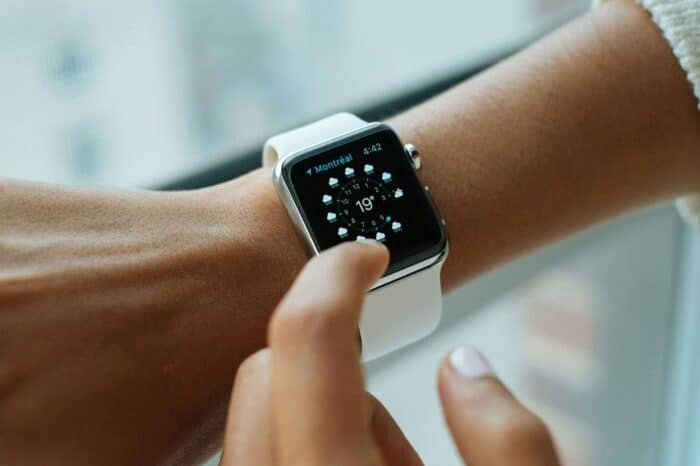
Wearable health technology has long been a rising demand ever since they were developed. Associated with step counts, heart rate goals, and nudges to stay active throughout the day, millions of people have largely been a part of this great momentum. Without these devices, no one would really have the urge to remain as healthy as they are now.
Throughout the years, there have been many deployments of wearable health data. From consumer-grade trackers like the Fitbit, Apple Watch, and Oura ring, to the clinical-focused devices like CGMs and ECG patches, there’s quite literally something for anyone who wishes to track their wellness and monitor where they stand from a health side.
Today, healthcare technology has never been more prominent, and especially with the rise in AI, its trajectory holds undeniable promise. Such smart devices have implemented automation to continuously collect and analyze data like blood oxygen, activity patterns, and even early disease protection. These AI-driven devices are transforming healthcare by shifting from reactive care to proactive, personalized health management.
As the use of wearables continues to increase, they’ve become an essential in nearly everyone’s daily lives. One recent study found that by 2032, the fitness tracker market is expected to surpass $187.2 billion, with revenue for fitness brands poised to soar at $81.06 billion alone. Those numbers underscore exactly how embedded these tools have become not just for consumers, but entire healthcare systems.
Yet, even as much hope as these devices hold, there are still raising concerns regarding what kind of data lies within them and where it flows. Some wonder whether the information generated by this technology is moving beyond personal and into the clinical space, emphasizing important questions about how laboratories and clinical sites should use and trust patient-generated data.
As Dinkar Sindhu, CEO of AXIS Clinicals puts it, the popularity among these tools seems reassuring, but they are also forcing health systems to rethink how patient records are integrated into clinical workflows. That problem is particularly vulnerable within early-phase research, where precision, validation, and compliance are foundational.
Sindhu has spent years working in the clinical research space, and he warns there’s some threat surrounding wearable data. While they offer continuous, real-world insights that traditional lab tests cannot, they also pose risks regarding accuracy and control.
Unlike lab data, which is collected under strict regulations, wearable technology computes data that varies widely based on device type, user behavior, and environmental factors. For instance, two patients could be wearing two different devices yet produce similar patterns, underlying how inaccurate the information can be. For labs, this kind of variability introduces many other problems if not noticed immediately.
Much beyond the consequential factors, many health systems are taking a cautious approach to wearable data, starting with pilot programs rather than quick adoption. These pilots allow labs and clinical teams to test specific cases without automatically implementing these devices into diagnostic or treatment decisions.
By focusing on the experimentation first, the results become significant. It allows research sites a safe way to learn initially by assessing data quality, understanding workflow, and establishing guardrails before permanently scaling. It becomes a strategy of moving responsibly, where thoughtful evaluation prevents harm from happening in the long run.
From a much larger perspective, piloting also presents a more positive shift for patient trials themselves. Wearable data can transform how clinical labs are designed and conducted, building a stronger framework for how information is delivered, how unhealthy patterns are detected, and how drug development is progressed.
As more health systems and people look toward health-focused technology, the state of healthcare and medicine is moving at unprecedented speed. Just like Sindhu suggests, the opportunity to get this right is optimistic, but the stakes are also high as patient data becomes less private and secure.
This is not to say we shouldn’t be investing in the newest health devices, but rather this is a window to redefine what it means to live in a tech-savvy environment. While there’s some hurdles involved, there’s certainly a better future as well.