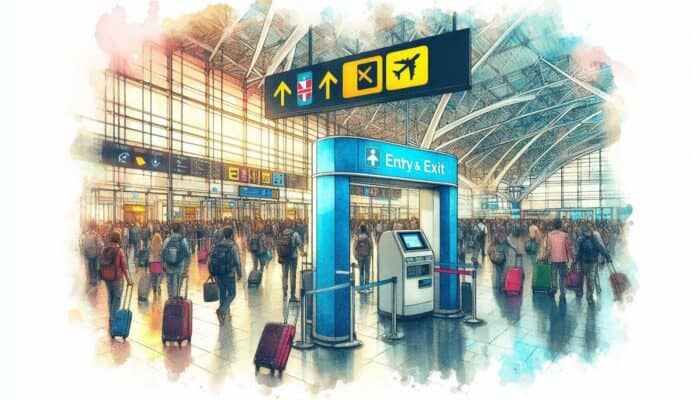
Europe’s upcoming authorization system mirrors the logic of U.S. ESTA, tightening screening before boarding and shifting compliance upstream to airlines and data matching
WASHINGTON, DC
Europe is preparing to add a new front-end checkpoint for millions of travelers who have long entered the Schengen area without obtaining a traditional visa. The European Travel Information and Authorisation System, known as ETIAS, is expected to begin operations in the last quarter of 2026, introducing a digital pre-travel authorization requirement for many visa-exempt visitors. The shift is not primarily about paperwork volume. It is about timing, data consistency, and what happens when a system flags a mismatch before a traveler ever boards a plane.
For decades, the friction point for short-stay travel into Europe has been the border booth. A traveler arrived, produced a passport, answered questions, and, if admitted, received a stamp that served as the visible record of entry. Over time, that model has been giving way to automated checks, shared databases, and more consistent identity screening across participating states. ETIAS is part of that movement. It relocates part of the decision pathway away from the physical border and into the pre-departure phase, where airlines and automated systems can prevent travel even when a traveler has a clean itinerary and a valid passport.
This change also reframes what “visa-free” means in practical terms. Visa-free travel is increasingly becoming “visa-free, but not precheck-free.” The traveler does not appear with a visa sticker, but must still obtain authorization tied to their identity and travel details. The moment of refusal can occur earlier. The consequences of an error can be immediate. And the margin for casual travel planning becomes thinner, especially for travelers with complex names, dual citizenship histories, past overstays, or inconsistent identity records across jurisdictions.
ETIAS is often compared to the U.S. Electronic System for Travel Authorization (ESTA) because the process is similar. In both systems, a traveler who is otherwise visa-exempt must provide advance data and receive authorization before boarding. In both systems, airlines become enforcement partners because they can be penalized for transporting inadmissible passengers. In both systems, the traveler’s compliance posture becomes something that can be assessed remotely, repeatedly, and at scale.
The result is a new reality for transatlantic mobility. Pre-travel screening is no longer an exception reserved for higher-risk routes. It is becoming the default architecture for short stays, with policy implications that extend beyond tourism into business travel, academic mobility, and family visits.
What ETIAS is, and what it is not
ETIAS is designed as a travel authorization system, not a traditional visa program. The practical difference matters because many travelers assume that “authorization” means a guaranteed right to enter. It does not. An ETIAS approval, like an ESTA approval, is typically a prerequisite for travel. The final admission decision still occurs at the border, where officers retain authority to question a traveler, assess credibility, and deny entry if conditions are not met.
ETIAS is also not a residency pathway. It does not convert short stays into long-term rights, nor does it relax the Schengen short-stay rules governing time in the area. If anything, it reinforces the trend toward enforcement by adding an earlier screening layer that can identify risk indicators before a traveler departs.
Where ETIAS changes the traveler’s experience is in the number of checkpoints where a trip can fail. In older models, the primary fail point was the border booth. Under ETIAS, the trip can fail at the application stage, at airline check-in, at the gate, at transit screening in certain routes, and again at the border. Each checkpoint has different actors, different timing, and different practical consequences for the traveler.
Why late 2026 matters: Sequencing and system maturity
European authorities have framed ETIAS as part of a broader modernization of external border management. The timing has been closely watched because it relates to the phased deployment of digital entry and exit tracking systems that more consistently record border crossings. ETIAS is expected to operate as a complementary layer, screening travelers against security and migration risk indicators before travel, while entry and exit systems record what happens at the border.
This sequencing matters operationally. Systems that rely on shared infrastructure tend to behave differently during early rollout periods than after years of refinement. Early phases can produce uneven traveler experiences across airports and land borders. They can also lead to a higher incidence of false positives, mismatches, and manual review queues as authorities calibrate how automated screening should operate.
For travelers, the practical lesson is that “late 2026” should be treated as the beginning of a transition period rather than the moment the system becomes invisible. In the first months of operation, the most common disruptions are not dramatic denials. There are delays, additional document requests, and unexpected boarding friction when airline staff are required to apply new rules in real time.
How ETIAS changes the mechanics of visa-free travel
Under a pre-travel authorization model, the traveler’s identity becomes a dataset that must match across multiple systems. A passport is no longer just a physical document. It becomes a record linked to a digital profile. Small errors that might once have been corrected at the counter can become trip-stopping issues because the system treats mismatched data as a risk signal.
Three mechanics drive the change.
First, the authorization step becomes time-sensitive. A traveler who previously booked a flight and departed with little lead time may now need to account for application submission, automated screening, and, in some cases, manual review. Even if many approvals are quick, the risk is concentrated in the minority that are delayed. That minority can include travelers with common names, multiple citizenships, prior immigration violations, or inconsistencies in prior travel records.
Second, the data fields become consequential. Names, dates of birth, passport numbers, and answers to eligibility questions must align. In a manual system, an officer might accept that a name is spelled differently because of transliteration. In a digital system, mismatches can trigger holds until a human reviewer resolves them. Travelers who have lived across multiple jurisdictions, changed names, or hold multiple passports are more likely to encounter friction because their identity history can be complex.
Third, airlines become the practical gate. Carriers already perform document checks because they face penalties for transporting passengers who are refused entry. ETIAS extends that function by requiring authorization as a binary prerequisite for boarding. The carrier’s decision becomes less discretionary. Airline staff often follow system prompts. If the system shows that authorization is missing or invalid, the traveler can be stopped at check-in even if they believe they can resolve the issue at the border.
In that sense, ETIAS is a structural shift from border enforcement to departure enforcement. It pushes compliance upstream, where the traveler has less opportunity to make a personal case to an officer and more dependence on system accuracy.
How ETIAS fits with Schengen enforcement and digital borders
Schengen’s defining feature is the free movement of people within its member states. Its tension point has always been external borders. Over time, Europe has been building a more standardized external border posture, even as internal checks periodically resurface during crises.
ETIAS accelerates the standardization trend. The authorization step is designed to operate across destinations, meaning a traveler’s precheck is not tied to a single country in the same way a traditional visa might be. That has two practical consequences.
One is that a denial can have broad effects. A traveler who is denied authorization is not simply blocked from one airport. The denial can complicate itineraries across multiple Schengen states, because the traveler cannot reliably choose a different Schengen destination to avoid the issue.
The second is that cross-system consistency becomes more important. When a traveler’s identity is screened before departure and recorded at entry and exit, discrepancies become easier to detect. A traveler who stretches stay limits, misrepresents purpose, or accumulates overstays is more likely to have a pattern that is visible and durable.
For legitimate travelers, the benefit is clarity. The system reduces ambiguity about whether a person has complied with short-stay rules. For marginal travelers, the system reduces the room for informal explanations.
Comparison with U.S. ESTA and the Visa Waiver Program
The ESTA comparison is not merely rhetorical. It clarifies how pre-travel authorization systems behave once they become embedded.
In the United States, ESTA is a prerequisite for Visa Waiver Program travel. It is designed to screen travelers in advance and to reduce the burden at ports of entry by shifting certain checks earlier in the process. Over time, ESTA has expanded in practical scope because eligibility can be affected by travel history and other factors, and because the U.S. has treated precheck as a tool to manage risk before the traveler reaches the border.
Europe’s move toward ETIAS reflects a similar logic. The policy gap narrows. The transatlantic norm becomes that visa-free travel is screened in advance, and that airlines are part of the enforcement chain.
That alignment has implications for reciprocity politics. When both sides operate precheck systems, each can argue that screening is a standard requirement rather than a discriminatory practice. At the same time, precheck systems can become bargaining chips during disputes about data sharing, traveler treatment, and broader immigration politics.

Airline gatekeeping: Why the airport counter becomes the new border
The most immediate traveler-facing impact of ETIAS is likely to be experienced at the airline counter, not the immigration booth.
Airlines operate under a risk-and-penalty model. If they transport someone who is not admissible, they can face sanctions, costs for return transport, and operational disruption. That creates strong incentives to err on the side of denial when documentation is unclear. With ETIAS, the carrier’s check becomes more automated. It will not rely only on a human reading a passport and a reservation. It will rely on system validation that an authorization exists.
This produces a predictable set of outcomes.
Travelers with last-minute plans are more exposed. If an application is delayed, the traveler can miss the flight. The airline may rebook, but the cost and hassle shift to the traveler.
Travelers with inconsistent data are more exposed. If the authorization application contains one spelling of a name and the airline booking contains another, the mismatch can cause validation to fail. The problem can be fixed, but not within the boarding time window.
Travelers in transit itineraries are more exposed. If a traveler is transiting through a hub and boarding multiple segments, the authorization requirement can be enforced at the first departure point. A denial can strand the traveler far from the destination and trigger cascading itinerary failures.
For frequent travelers, the best practice becomes administrative discipline. A traveler who treats bookings casually, uses different name formats across reservations, or relies on travel agents who input inconsistent data increases the chance of disruption under a precheck model.
Denials and delays: What happens when ETIAS is not straightforward
Pre-travel authorization systems rarely operate on a simple approve-or-deny binary for every applicant. The more common friction points are delays, manual review, or requests for additional information. Those outcomes matter because they interact with airline schedules and personal timelines.
A delayed authorization can have the same practical impact as a denial if it occurs close to departure. Travelers who apply late are essentially betting that their application will be approved quickly. For many, it will be. But the travelers who lose that bet often experience the disruption as arbitrary, because the system does not always provide an immediate, detailed explanation that can be resolved in minutes at the counter.
A denial can also carry persistent consequences. Travelers often assume they can simply reapply. In practice, reapplication can require additional documentation or a waiting period, and repeated applications can compound scrutiny. A denial may not be permanent, but it can become a risk marker that affects future applications, especially if the underlying issue relates to identity integrity or compliance history.
For business travel, the impact can be acute. A missed flight can mean a missed negotiation, a missed meeting, or a contract delay. For families, the impact can be personal. A denied boarding can mean a missed funeral, a missed birth, or a disrupted caregiving plan. Precheck systems shift the emotional weight of mobility toward administrative accuracy.
Data consistency and identity continuity are the practical risk people underestimate
In modern travel systems, identity is not only who you are. It is what the databases think you are.
ETIAS will depend on accurate data entry and on consistent identity records across multiple systems. Travelers whose identities have complexity should anticipate higher friction, particularly:
People with transliteration variants in names from non-Latin scripts.
People who have changed names through marriage, adoption, or legal processes.
People who hold multiple passports or frequently renew them.
People with long travel histories across jurisdictions with different record standards.
People who have had prior immigration complications, including overstays or refusals.
None of these factors automatically means denial. But they increase the likelihood of manual review or mismatch flags. The underlying issue is that automated systems are built to detect deviations. Deviations are not always fraud, but the system can treat them as signals that require confirmation.
This is where travelers and institutions often fail to prepare. They assume that because they are lawful, the system will be easy. The system does not assess lawfulness only by intent. It assesses it by the coherence of records.
How ETIAS could affect U.S. travel outcomes and reciprocity disputes
Europe’s precheck system does not directly replace U.S. entry records. But global mobility is increasingly assessed as a pattern, and patterns cross borders.
A traveler who accumulates denials, delays, or compliance issues in Europe can find that these issues surface indirectly in future U.S. contexts, particularly during visa interviews, where travel history is discussed, or during admission screening, where credibility and consistency matter.
The reciprocity dimension is broader. As Europe digitizes screening and expands gatekeeping before departure, the United States may face pressure to explain differences in how it treats European travelers, how it applies its own screening rules, and how it manages data. These disputes tend to flare in political moments, but the underlying driver is structural. When both sides operate precheck systems, both sides can tighten, and the traveler experiences the compounded effect.
Case patterns seen in precheck environments: How disruptions actually happen
Precheck systems tend to generate recurring case patterns that are neither dramatic nor disruptive.
The common-name review. A traveler with a common name is flagged for manual review because the system must ensure they are not a match to a watchlist entry. The traveler is lawful, but the review takes time. If the traveler applied late, the delay becomes a missed flight.
The booking mismatch. A traveler’s passport shows a middle name, but the airline booking omits it. The authorization is linked to the full name. The validation fails. The traveler argues that it is the same person. The airline staff follow system prompts and deny boarding until the record is corrected.
The passport renewal gap. A traveler renews a passport shortly before travel. The authorization is linked to the old passport number. The traveler forgets to update. The airline check fails. The traveler must either submit a new authorization or correct the data, or the flight will leave without them.
The close-to-limit traveler. A traveler who regularly spends extended periods in Schengen applies for authorization. The system or the review process flags the pattern as a potential de facto residence without status. The traveler may be asked for additional information or denied entry if the risk profile is deemed high.
The prior overstay. A traveler with an old overstay believes it was resolved informally years earlier. In a digital environment, it can remain as a recorded event. The traveler faces questions or additional checks, and the issue becomes a recurring obstacle.
These patterns illustrate the operational truth. ETIAS will not only screen for serious threats. It will also screen for coherence, consistency, and compliance signals that the system can compute.
Key questions readers ask
When will ETIAS start?
EU travel authorities have described an expected start in the last quarter of 2026, with operational timing tied to broader border modernization sequencing and the realities of phased implementation.
Who needs it?
Visa-exempt travelers visiting Schengen countries for short stays are expected to need ETIAS authorization before departure once the system is operational, including many travelers who have historically entered without obtaining a traditional visa.
What happens if it is denied?
Travel can be stopped before boarding. In many cases, the next steps involve reapplication, data correction, or submission of additional documentation. The practical impact is often immediate because airlines enforce authorization status at check-in and at the gate.
Will ETIAS guarantee entry?
No. Authorization is typically a prerequisite for travel. Admission decisions remain at the border, where officers can deny entry based on the traveler’s circumstances, documentation, and credibility.
What should travelers do to reduce risk?
Apply early, keep identity data consistent across bookings and documents, track Schengen day counts carefully, and avoid last-minute changes that create mismatches between passport details, authorizations, and airline records.
Amicus International Consulting provides professional services supporting lawful travel compliance, document readiness, and risk-managed mobility planning under evolving pre-travel authorization systems.
Amicus International Consulting
Media Relations
Email: info@amicusint.ca
Phone: 1+ (604) 200-5402
Website: www.amicusint.ca
Location: Vancouver, BC, Canada