A cracked windshield used to be a simple repair. A shop cut out the old glass, set a new one, and the driver went on with the day.
On most newer vehicles, the job now includes a part that drivers rarely see. A small camera sits behind the glass near the rearview mirror, and it feeds the systems that brake for a stopped car or nudge the wheel when the vehicle drifts out of its lane.
When the windshield comes out, that camera comes out with it. How it goes back in decides if those safety features work the way the automaker designed them.
Driver Assistance Is Now Standard Equipment
Features like automatic emergency braking and lane departure warning started on a handful of luxury models. They are now on almost everything sold new.
The Highway Loss Data Institute, an insurance-funded research group, tracks how quickly these systems spread. In its April 2026 bulletin, front automatic emergency braking was standard on 90 percent of new vehicle series for the 2025 model year, up from 6 percent a decade earlier. Lane departure warning was standard on 79 percent.
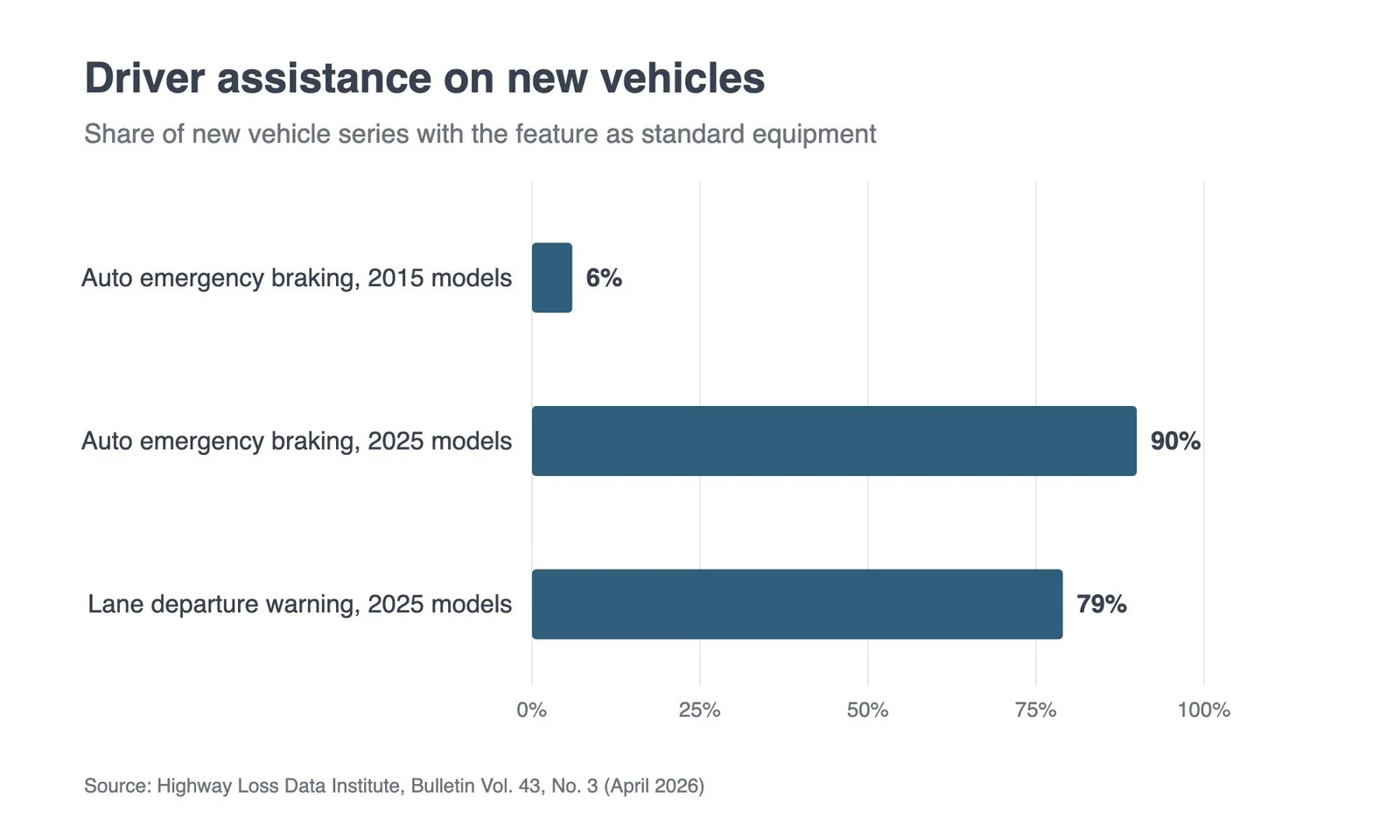
Automatic emergency braking went from rare to nearly universal on new vehicles in ten years.
The older cars on the road keep the overall number lower for now. The same bulletin estimates that 37 percent of all registered vehicles had front automatic emergency braking in 2025, a share it expects to reach 59 percent by 2030. Every year, more of the cars pulling into a glass shop carry a camera in the windshield.
Why a New Windshield Means Recalibrating the Camera
The camera reads the road through a precise patch of glass. It has to point exactly where the automaker intended, because a small error at the windshield grows into a large one far down the road.
That is why replacement involves more than glass. The camera has to be moved to the new windshield, mounted in the correct position, and then calibrated so that the system knows where it is looking. Depending on the vehicle, calibration happens in a shop with printed targets, on the road at set speeds, or both.
The glass itself matters as well. In its research, AAA noted that many automakers require or strongly suggest original equipment glass on vehicles with windshield cameras. Toyota, for one, warns that aftermarket glass may have a black border the camera cannot see through properly, or may be missing the brackets that hold the camera in place.
What Calibration Adds to the Bill
Drivers often learn about calibration when they see the estimate. A December 2023 study from AAA priced repairs on three popular 2023 models: the Ford F-150, the Nissan Rogue, and the Toyota Camry.
For a windshield replacement, the average estimate came to $1,439.78. Of that total, $360.00, or 25.4 percent, went to moving the driver assistance components to the new glass and performing the required calibration.
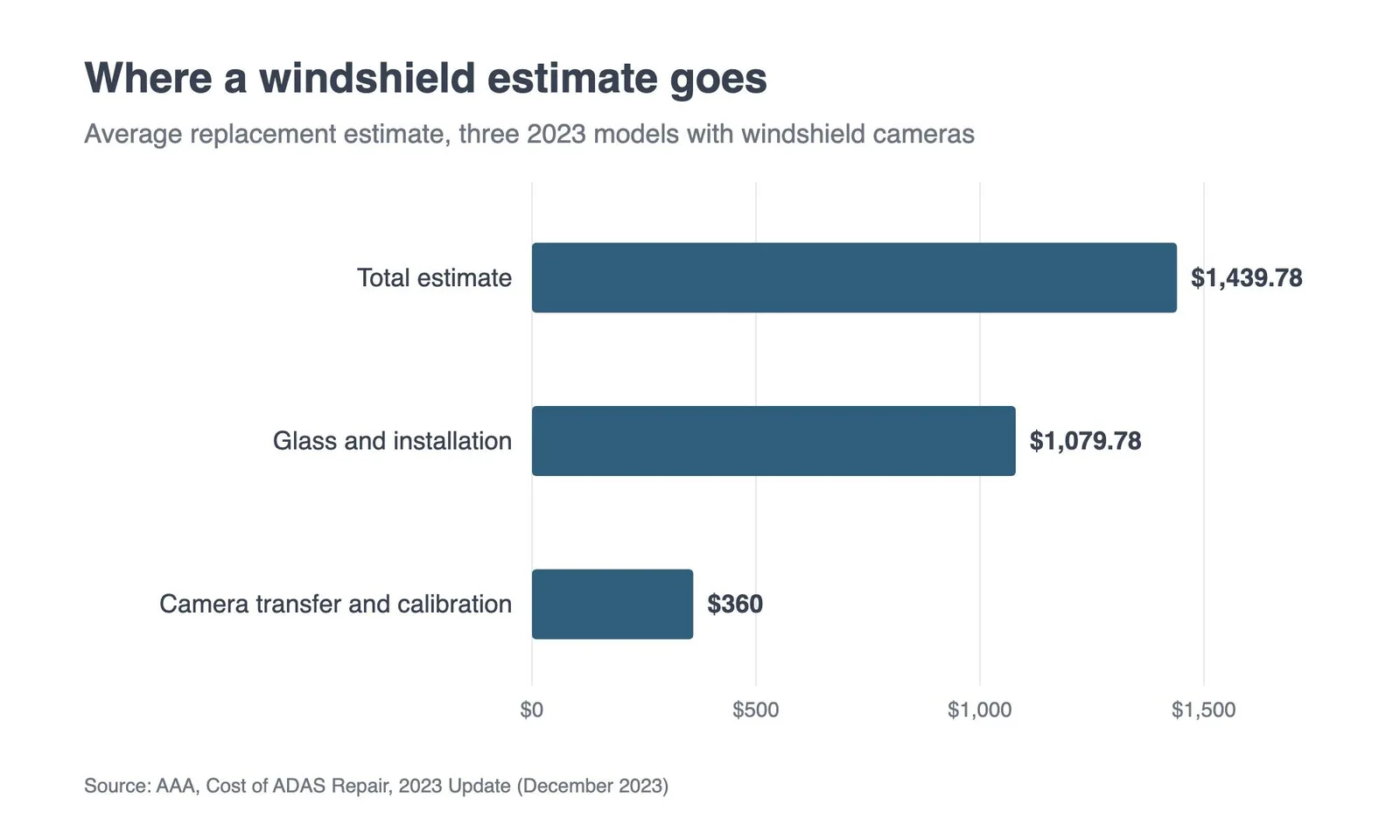
About a quarter of the average windshield estimate in AAA’s study went to the driver assistance work.
Those figures come from three specific vehicles in 2023, so a given car today may cost more or less. The point for drivers is the proportion. On a camera-equipped car, calibration is a large, normal part of the job, not an optional add-on.
Louisiana Now Requires Shops to Put It in Writing
Louisiana drivers have new protections when an insurance policy pays for the glass. Act 327 of the 2026 regular session, which created the Louisiana Motor Vehicle Glass Law, was signed and took effect on May 22, 2026.
Under the law, before a shop takes on a glass job paid for through the customer’s own insurance, it has to tell the customer in writing if the vehicle has a driver assistance system. If it does, the shop has to state in writing if the manufacturer calls for calibration after the work, and if the shop plans to calibrate the system to the manufacturer’s specifications.
If the shop cannot or will not do the calibration, it has to tell the customer in writing that the vehicle should go to a certified dealership or a qualified specialist. When a calibration is done, the shop owes the customer a written notice saying if it succeeded. The law also calls for a written, good-faith estimate before the work and an itemized invoice afterward.
Questions to Ask Before You Book
With or without an insurance claim, a few questions help a driver understand what they are paying for:
- Does my vehicle have a camera or other sensors that rely on the windshield?
- Does the manufacturer require calibration after replacement, and what type?
- Will the calibration be done as part of this job, or will I need to take the car somewhere else?
- Will I get written confirmation that the calibration succeeded?
- Is the replacement glass made for a camera-equipped version of my vehicle?
A shop that has confirmed the exact vehicle before arriving can usually answer all five on the first call. Giving the shop the vehicle identification number, or VIN, up front helps it match the right glass and the right calibration procedure.
Local Shops Are Adapting
Smaller glass businesses have had to change how they work as cameras became standard. In the Baton Rouge area, for example, the family-owned shop Modern Auto Glass replaces windshields at customers’ homes and workplaces. It asks for the VIN on its quote form to identify the correct glass, and it tells drivers what their vehicle needs before any work starts. Drivers in the city can find service details on its page for Baton Rouge drivers.
A Windshield Job Is Now a Safety System Job
For most of the cars on Louisiana roads today, the windshield does two jobs. It keeps out wind, rain, and road debris, and it gives the car’s safety systems a clear view ahead.
A replacement is finished when both jobs are restored. Asking about the camera before the work starts, and getting the answers in writing, is the simplest way for a driver to make sure that happens.