


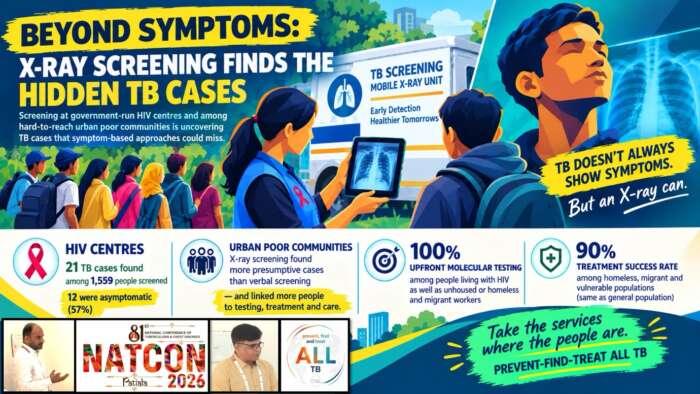
Community-based chest X-ray programs in Delhi detected tuberculosis in people who showed no symptoms, according to two presentations at NATCON 2026.
The programs used AI-assisted chest X-rays to identify people who needed further testing. Molecular tests then confirmed whether they had tuberculosis.
TB Found During Routine HIV Care
Humana People to People India introduced chest X-ray screening at two government-run antiretroviral therapy centres in Delhi.
Between May 1 and August 31, 2026, the program screened 1,559 people living with HIV.
The X-rays identified 273 people as having presumptive TB. All 273 received molecular testing.
Twenty-one people were subsequently diagnosed with active tuberculosis.
Of those, 12 had no symptoms.
That meant 57.14% of the people diagnosed through the program would not have been identified through symptom screening alone.
All 21 patients began treatment through India’s National Tuberculosis Elimination Programme.
The program allowed patients attending the centres for routine HIV care to receive a chest X-ray during the same visit.
When an X-ray indicated possible TB, staff collected sputum samples and sent them for molecular testing that day.
Taking TB Screening Into Communities
A second initiative examined TB screening among vulnerable populations in Delhi, including migrant workers and people who were homeless or living in temporary settlements.
The LEAD-2 project worked with nine government-run chest clinics between November 2025 and August 2026.
Teams used community screening camps, AI-assisted chest X-rays and follow-up support to connect people with testing and treatment.
The project screened 30,025 people using chest X-rays.
Of those, 4,082, or 13.5%, were classified as presumptive TB cases. Molecular testing subsequently confirmed tuberculosis in 234 people.
By comparison, verbal screening of 13,912 people identified 759 presumptive cases. Testing confirmed TB in 354 of them.
The two screening methods therefore identified substantially different groups.
Symptom screening produced a higher proportion of confirmed cases among those referred for testing. X-rays identified a much larger group requiring investigation, including people without symptoms.
X-rays Identify Hidden TB Cases
The LEAD-2 program separately reported screening 26,639 people who had no TB symptoms.
X-rays identified 1,533 of them as presumptive cases.
Molecular testing confirmed tuberculosis in 52 people.
The project reported that all presumptive cases received molecular testing. It also reported that 99% of people diagnosed with TB began treatment.
The program adapted its screening methods to different environments.
Teams used vehicle-based X-ray units for dispersed homeless populations. In crowded settlements where vehicles could not enter, workers used portable battery-operated X-ray machines.
Project teams also provided TB preventive treatment to 232 close contacts of people diagnosed with active disease and 1,222 people from vulnerable populations.
Screening Beyond Symptoms
The two Delhi programs suggest that relying exclusively on symptoms can miss people who already have active tuberculosis.
Chest X-rays remain a screening method rather than a definitive diagnosis. People whose scans indicate possible TB still require confirmatory molecular testing.
The Delhi initiatives combined screening with testing, treatment and community follow-up.
Their results also show why TB detection programs increasingly need to reach people before symptoms drive them into a clinic.