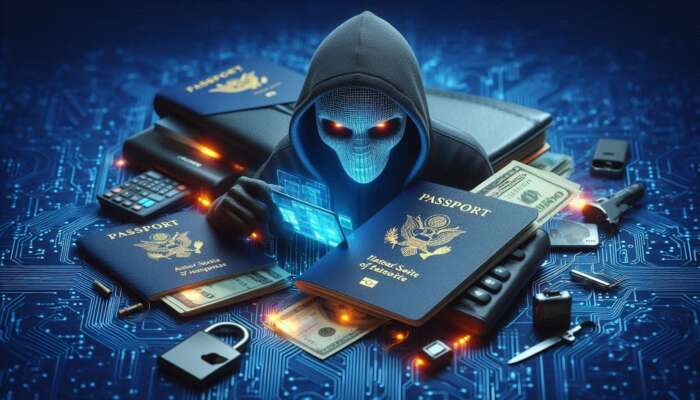
Online identity change offers promise secrecy and speed, but many lead to fraud, extortion, fake documents, and criminal exposure.
WASHINGTON, DC.
The online market for “new identities” has never looked more polished, more global, or more convincing than it does in 2026, and that is exactly what makes it so dangerous for frightened, impulsive, or desperate buyers. Search results now fill with sleek websites, encrypted chat handles, fake consultants, darknet vendors, AI-generated document samples, and paid ads that promise a clean break from real life with the speed of a shopping app and the secrecy of a spy novel. The pitch is almost always the same, because the seller claims to provide a fresh passport, a clean backstory, working identification, maybe even a bankable profile, all without the delays and scrutiny that real governments require. What is actually being sold is usually fraud, extortion, stolen data, synthetic identity material, or empty theatre dressed up as private relocation.
That gap between promise and reality matters more now because buyers are often not casual thrill-seekers looking for a criminal toy. Many people under real pressure have convinced themselves that a digital shortcut is the fastest way out of a humiliating, unsafe, or unbearable situation. Some fear harassment, exposure, stalking, debt, reputational collapse, or political hostility. Others want to run from legal or financial obligations and tell themselves the digital route is only temporary. In both groups, urgency becomes the exploitable weakness. The seller does not need a lawful product. The seller only needs a frightened customer who wants relief faster than the law can provide it.
The online identity market is selling speed where the real world demands proof.
That is the first hard truth people tend to resist after they have spent too many late-night hours reading anonymous forums and polished scam pages. Lawful identity change is slow because it has to survive inspection. It usually requires documentation, eligibility, record consistency, and government recognition strong enough to hold up when a bank, a landlord, an employer, or a border officer asks normal questions. The illegal online market offers the exact opposite experience. It promises no scrutiny, no waiting, no historical link, and no meaningful legal chain. That is precisely why it feels so seductive, especially to people who are exhausted or panicking.
A real system asks where the new name came from, what legal authority approved it, how the old records connect to the new ones, and whether the present identity can stand up under tax, travel, and compliance review. A scam vendor asks only for cryptocurrency, a headshot, an address for delivery, and the buyer’s willingness to believe impossible things. The buyer interprets the lack of friction as proof of discretion. In reality, it is usually proof that nothing lawful is happening at all.
Most “new identity” offers online collapse into four ugly categories.
The first category is the fake-document scam, where the buyer receives a counterfeit passport image, a fabricated driver’s license, a fake birth certificate, or a bundle of documents that might look impressive on a screen but collapse the moment they meet a serious institution. The second category is the stolen-identity scam, where the buyer is not getting a “new” identity at all but fragments of a real person’s data, leaked records, or recycled credentials that were already stolen from someone else. The third category is the synthetic-identity scam, where bits of fake and real data are blended into something that might survive a weak online form but fails under real verification. The fourth category is the pure exit scam, where no usable document ever existed, and the seller simply keeps demanding more money for “expedited issuance,” “database insertion,” “courier release,” “chip programming,” or some other invented fee until the buyer finally realizes there is no product.
All four models are thriving because the public still underestimates how much criminal infrastructure sits behind the online identity economy. In February 2026, the U.S. Department of Justice announced that the operator of the “OnlyFake” platform pleaded guilty after prosecutors said the site sold more than 10,000 digital fake identity documents, including passports and driver’s licenses, which is a blunt reminder that this market is not a quirky subculture but an active criminal business under federal pressure. The government’s own OnlyFake guilty plea announcement tells the story more clearly than any privacy forum ever will.
The buyer’s emotional story does not change the legal reality.
This is where many people get themselves into serious trouble, because they believe their motives somehow soften the nature of the act. They tell themselves they are not really fraudsters because they are not trying to traffic drugs, move sanctions money, or build a cartel shell company. They are “just” trying to get away, breathe, start over, or stop living under a current name that feels poisoned. The problem is that institutions do not evaluate identity fraud according to the buyer’s self-image. They evaluate acts, records, and inconsistencies.
A forged government document is still a forged government document. A stolen identity package is still stolen data. A synthetic financial profile is still a fraud problem. A fake passport used for travel, banking, payroll, leasing, or visa applications does not become morally lighter because the buyer feels desperate. That is why so many people who enter this market looking for privacy leave it with a larger problem than the one they started with. They have not escaped exposure. They have created a second exposure, one that now includes document crime, payment trails, extortion risk, and often a trail of chats or uploaded selfies that can be turned against them.
Reuters captured a different corner of the same reality in March 2025 when it reported on a former lawyer sentenced to prison after using fake identities to get jobs at law firms, which is a useful reminder that identity manipulation tends to metastasize once it enters real systems. The crime rarely remains limited to one false name on one form. The Reuters report on the fake-identity law-firm case reads less like a thriller and more like a warning about how quickly “temporary” deception hardens into federal sentencing.
The panic starts when the fake identity touches a real institution.
This is the stage sellers rarely discuss, because it is where the illusion begins to rot. The forged driver’s license might look convincing when photographed under dim light and sent over an encrypted app. The fake passport image might look impressive in a screenshot. The synthetic utility bill might seem plausible on first glance. Then the buyer tries to use it.
The bank account application is held for review. The KYC vendor flags a mismatch. The platform asks for a live video check. The employer demands secondary proof. The landlord runs an address and identity history that does not align. The airline booking creates document questions. The visa application triggers a timeline inconsistency. The courier requires adult identification at delivery. The border officer scans the booklet, and the silence gets uncomfortable.
That is when the psychology flips. The buyer thought the purchase was the hard part. In reality, the hard part begins when the fake life has to interact with institutions that compare data rather than merely admire images. Many people panic at exactly that point, because they suddenly understand that what they bought was not a new identity at all. They bought a set of props that cannot withstand real scrutiny.
The sellers often become predators the moment the buyer hesitates.
Another underappreciated risk is that identity scammers frequently evolve into extortionists. Once the buyer has paid, sent photographs, submitted personal data, disclosed intent, or revealed some part of their current vulnerable situation, the seller has leverage. Some threaten to expose chat logs, crypto wallets, addresses, email accounts, or uploaded facial images if the buyer refuses to send more money. Others simply disappear, leaving the customer to worry that the very act of searching for a “new identity” has created a permanent blackmail surface.
This is one reason the market is darker in 2026 than it looked even a few years ago. The tooling is better. AI-generated samples look cleaner. Scam sites are more persuasive. Seller scripts are more professional. Social media ad ecosystems are still porous enough that fraudulent identity offers keep finding the right frightened eyes at the right moment. Reuters’ late-2025 investigation into how scam advertising survived on major platforms is highly relevant here, because the Reuters reporting on scam ads and platform tolerance shows how easily bad actors can keep identity-related offers visible while looking just legitimate enough to lure the desperate.
What many buyers really need is not a fake identity but a lawful reset.
This is the point the online market works hardest to bury. A large share of people searching for “new identity online” are not truly asking for counterfeit passports or stolen records. They are asking, often in terrible language, for a legal way to become less exposed. They want a lower-profile jurisdiction, a lawful name change, a safer daily routine, a privacy-oriented move, a second passport, a cleaner way to travel, or a structure that lets them stop feeding every detail of their life into public and commercial systems.
That is why the lawful side of the market sounds so different from the criminal side. Serious privacy planning begins with documentation, eligibility, consistency, and legal durability. It is interesting in what will survive banks, taxes, travel, property, family law, and ordinary scrutiny, not what will look impressive in a Telegram photo. People exploring legal new-identity planning or the broader myths versus reality of a new identity are often trying to answer a far more realistic question, which is whether life can be restructured lawfully enough to reduce exposure without creating a criminal time bomb.
The lawful answer is slower, less magical, and much less marketable than the scam answer. That is also why it is the only answer that tends to survive.
The bottom line is harsher than the marketing.
If someone online says they can sell a complete New Legal Identity, a working passport, clean civil records, and seamless anonymity with no meaningful government process, no real eligibility review, and no lawful documentation chain, they are not selling reinvention. They are selling fraud, fantasy, or leverage over the buyer.
The reason the criminal market feels more efficient is not that it has discovered a smarter system. It is that it does not have to survive reality. The lawful path is slower because the lawful path has to keep working after the first bank review, after the first tax filing, after the first border crossing, and after the first serious question.
That is the dark truth in 2026. Getting a new identity online is dangerous not only because the documents may be fake, but because the entire ecosystem is built to turn fear into payment and payment into deeper vulnerability. The click is easy. The transfer is easy. The panic comes later, usually at the exact moment the buyer realizes they have not purchased a new life at all. They have purchased a second crisis.